Pitch deck examples by stage
| Stage | Example | Slides | What the deck has to prove |
|---|---|---|---|
| Pre-product | Uber, 2008 | 8 to 12 | The problem is real and the timing just changed |
| Seed | Airbnb, 2009 | 12 to 15 | People want it, and the market math works |
| Series A | Front, 2016 | 15 to 20 | Growth repeats, and the money turns into more of it |
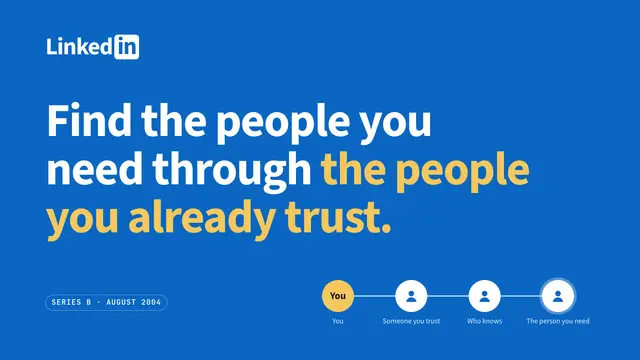
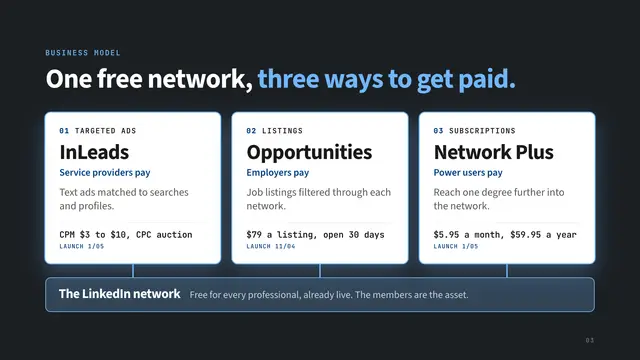
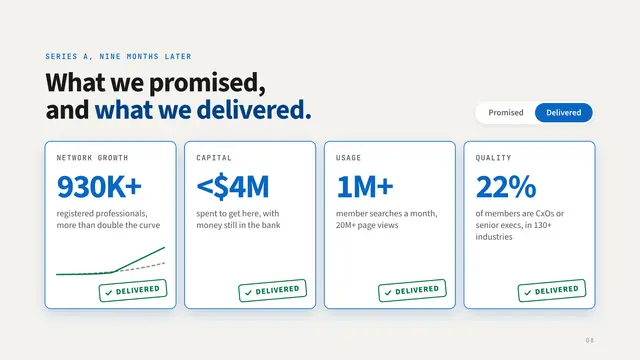
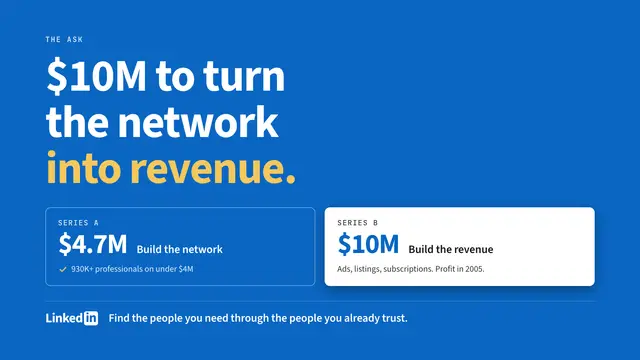
| Series B | LinkedIn, 2004 | 15 to 20 | You did what you said last round, and the path to profit |
-
Pre-product
Uber pitch deck (2008)
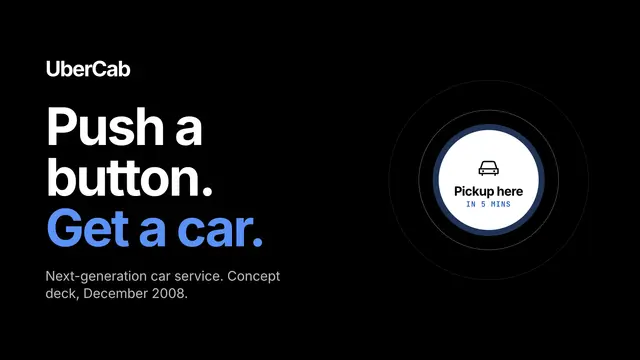
Push a button, get a car. In 2008.
- Pre-product
- 25 slides
- Garrett Camp
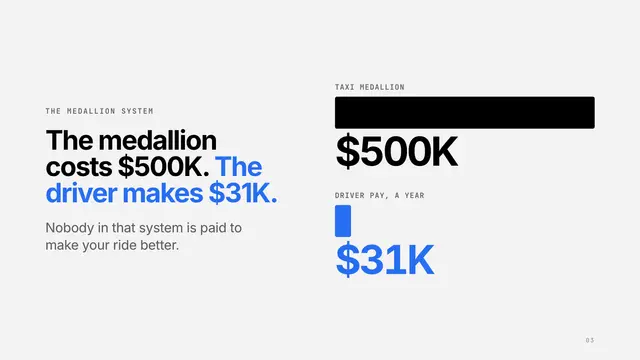
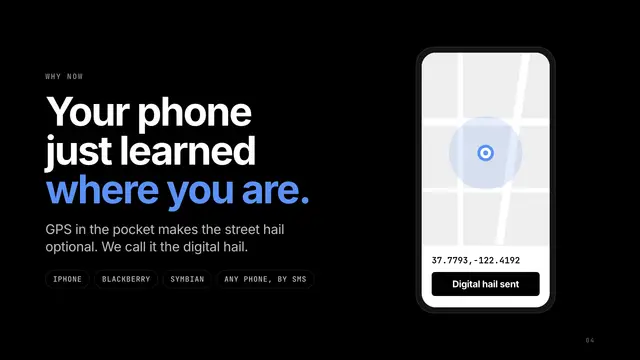
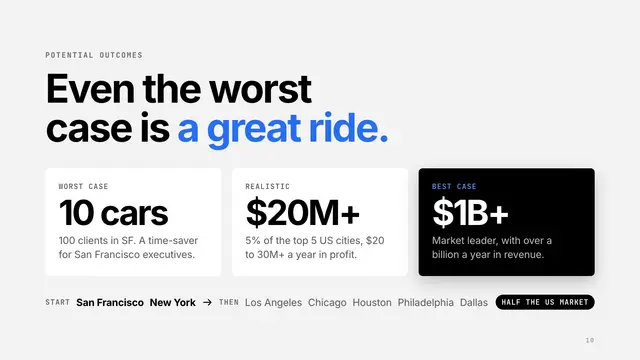
What to steal: With no product and no customers, UberCab sold a broken system and a timing shift: medallions cost $500K while drivers make $31K, and phones just learned where you are. Then it showed the worst case was still a good business.
-
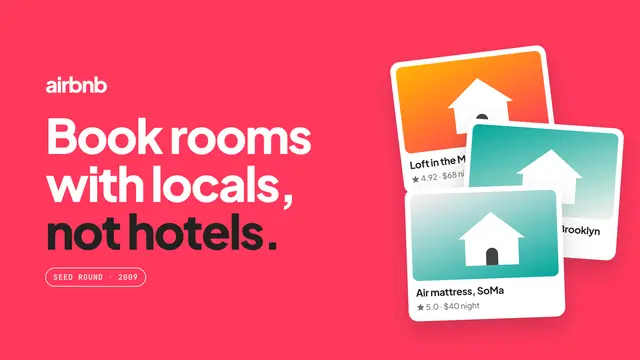
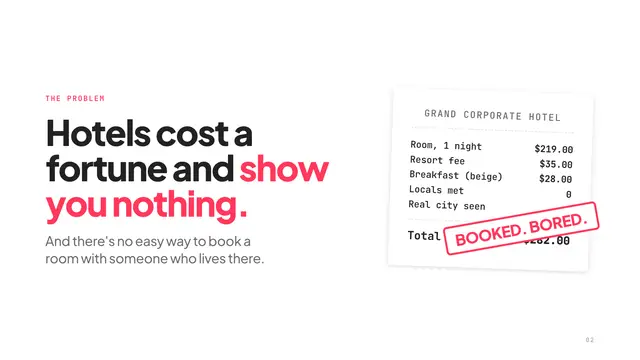
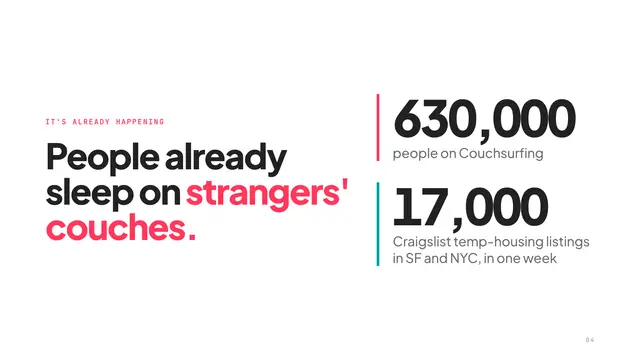
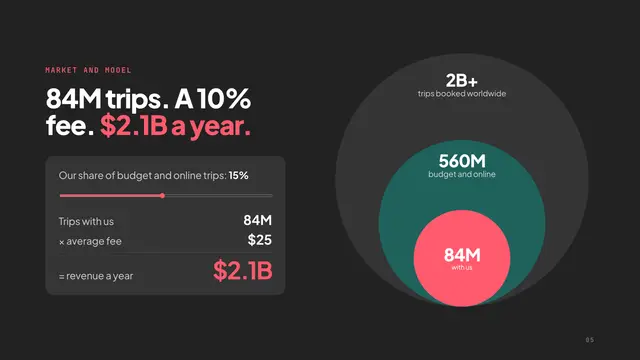
What to steal: The most copied seed deck there is, because every slide does one job. A one-line promise, a problem you can price, proof people already behave this way (Couchsurfing), and market math built from trips, share and a 10% fee.
-
-
Series A
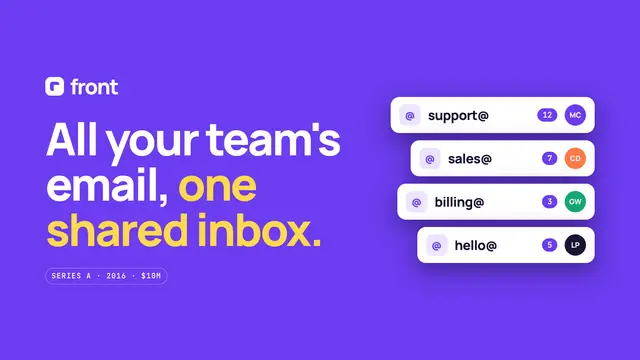
Front pitch deck (2016)
The founder graded her own slides. We fixed the weak ones.
- $10M Series A
- 3 term sheets in 10 days
- Mathilde Collin
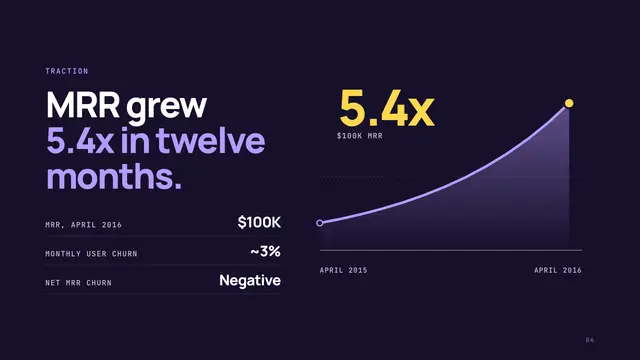
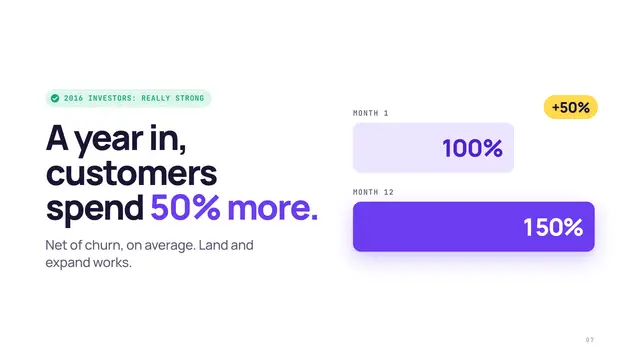
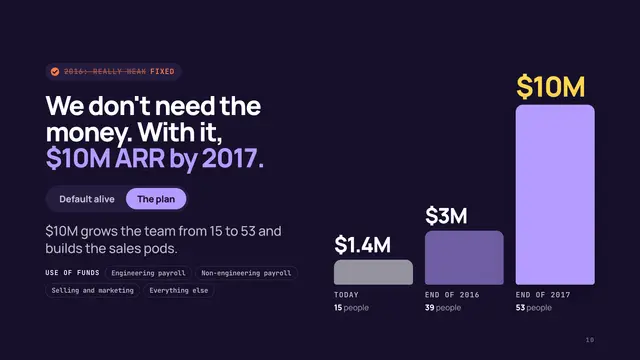
What to steal: Series A is about whether growth repeats. Front's deck leads with customers who won't go back, then shows MRR up 5.4x in a year, customers spending 50% more a year in, and spend below revenue. The use of funds is tied to hires.
-
What to steal: Reid Hoffman answered the scariest question, no revenue yet, before showing the product. Then a slide that holds last round's promises next to what was delivered, which is the whole case for the next round.
-
-
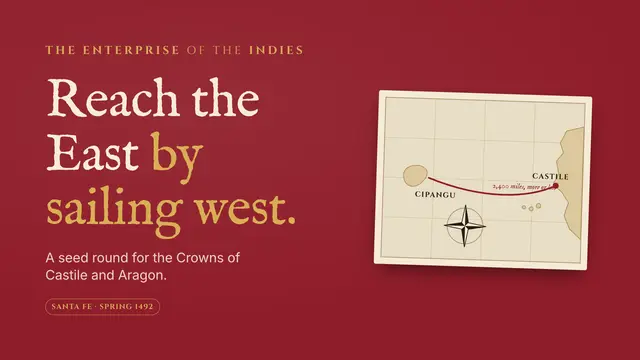
Seed, 1492
Christopher Columbus pitch deck (1492)
Asia is just west. Probably.
- 3 ships
- About 90 crew
- 10% of the take
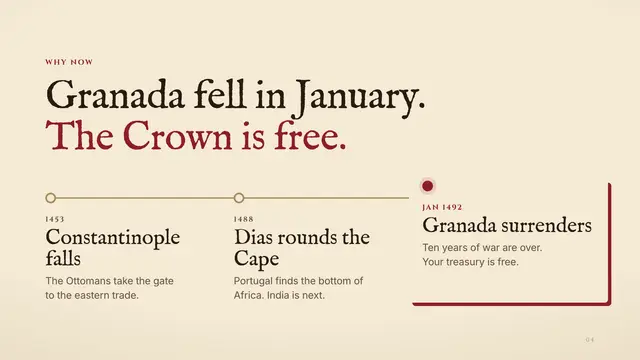
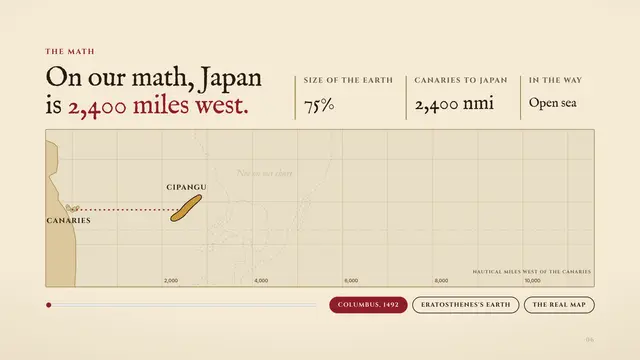
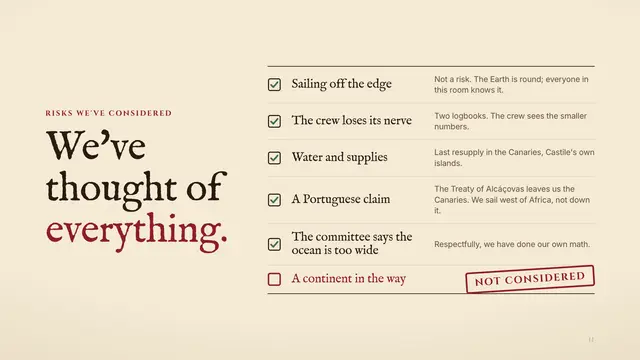
What to steal: A history deck with a real lesson: a why-now slide (Granada fell, so the Crown has budget), a slider on the one estimate everything rests on, and a risks slide that names every objection before the room does.
Pitch deck template: the ten slides they share
Strip away the styling and these decks follow the same order. Use it as your outline: one slide per beat, and a headline on each that states the claim, not the topic. "84M trips. A 10% fee. $2.1B a year." beats "Market size".
- 01
One-line promise
What you do, in a sentence someone could repeat to a partner.
Airbnb: "Book rooms with locals, not hotels." - 02
Problem
Make the pain concrete: a price, a moment, a receipt.
Airbnb: "Hotels cost a fortune and show you nothing." - 03
Why now
The shift that makes this possible today and not five years ago.
Uber: "Your phone just learned where you are." - 04
Solution and product
Show the product doing its one main thing, start to finish.
Front: "Every email finds the right teammate." - 05
Traction
Your strongest number, with its trend. Lead with it if it is your best proof.
Front: "MRR grew 5.4x in twelve months." - 06
Market
Size it bottom-up, customers times price, with the math showing.
Airbnb: "84M trips. A 10% fee. $2.1B a year." - 07
Business model
How you make money and why the unit economics work.
Uber: "Luxury on demand, profitable by design." - 08
Competition
Where you stand alone, and why others can't follow quickly.
Christopher Columbus: "Portugal is going around Africa. We go straight there." - 09
Team
Why these people, one line each.
LinkedIn: "People who've scaled networks before, backed by Sequoia." - 10
The ask
An amount, the milestone it buys, and when.
LinkedIn: "$10M to turn the network into revenue."
Need the numbers for slide 6? Size it with the TAM SAM SOM calculator. Need the sentence for slide 1? Write it with the elevator pitch builder.
What investors look for
- Investors skim: DocSend measured about 3.7 minutes per deck, and decks that fail are dropped in about 2. The first two slides decide whether the rest gets read.
- Every headline is a full-sentence claim, and each beat gets one slide, three at most (Y Combinator).
- Lead with your strongest proof, traction or team, whichever is stronger.
- Size the market bottoms-up (customers × price), with the math visible.
- The ask names an amount, the milestone it buys, and when.
The mistakes that get a deck skipped
- Topic-label headlines ("Market", "Team")
- A top-down TAM with no path to it
- Traction buried after the product tour
- An ask with no milestone
More famous decks founders study
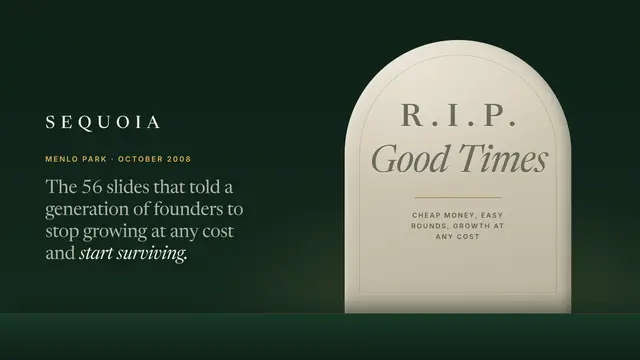
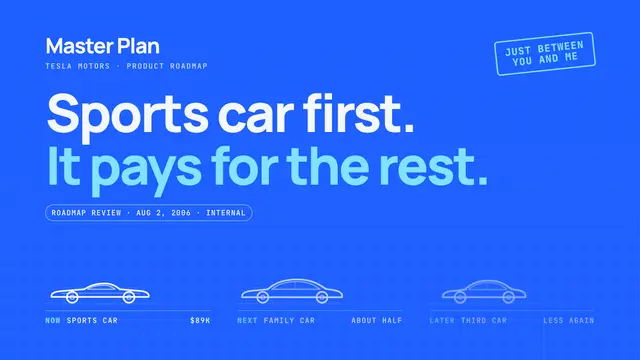
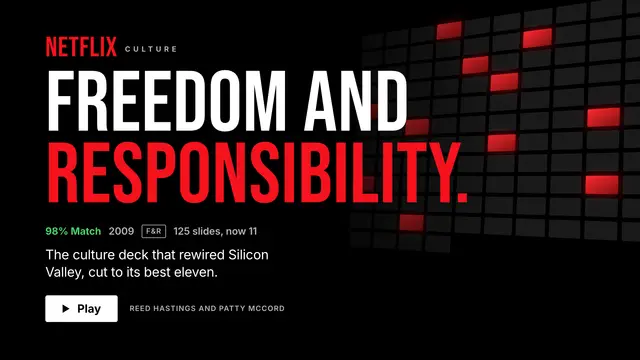
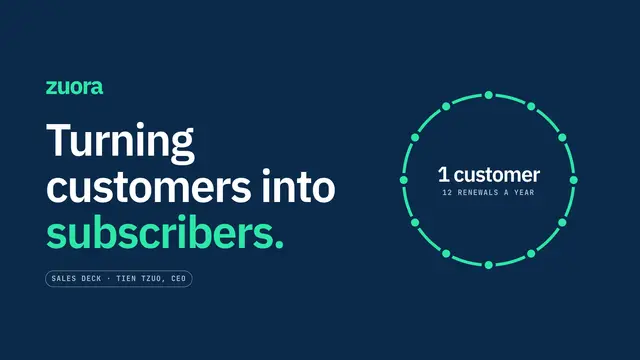
Not pitch decks, but searched for like them, and worth stealing from.
Pitch deck questions
What should a pitch deck include?
A one-line promise, the problem, why now, the product, traction, the market, the business model, competition, the team, and the ask. Ten to fifteen slides covers it at seed. The template on this page shows each slide with a famous deck that does it well.
How many slides should a pitch deck have?
Pre-seed 8 to 12, seed 12 to 15, Series A 15 to 20, and growth rounds 18 to 25 plus a data appendix. Investors skim, so fewer, sharper slides beat more. Airbnb's seed deck was 14 slides; our rebuild makes the same case in 10.
What is the best pitch deck example?
Airbnb's 2009 seed deck is the most studied, because each slide does exactly one job. For a later round, Front's Series A deck is the clearest example of proving growth repeats, and LinkedIn's Series B deck shows how to report promises against results.
Is there a free pitch deck template?
Yes. The template on this page is free to copy, and every example can be played and reused as a structure. Pitch Unfairly's free plan builds a deck from any of them in ChatGPT, in your own brand, at a link you can send.
What makes a pitch deck good?
Every headline states a claim instead of a topic, the strongest proof comes early, the market is sized from customers and price you can defend, and the ask names an amount and the milestone it buys.
What is the difference between a pitch deck and an elevator pitch?
An elevator pitch is the 30 to 60 second spoken version that earns the meeting. The pitch deck is what you send and present once you have it. The deck's first slide should be your elevator pitch in one sentence.
Make yours from these examples
Type your site. Pitch Unfairly builds the deck in ChatGPT, in your brand, on the structure of the example you pick, and gives you a link to send.